Showing posts with label XX Century. Show all posts

20 September 2009

Delray Beach: Florida - by Stephen Shore 1973


Stephen Shore nasceu em Nova Iorque em 1947. Aos 6 anos um familiar oferece-lhe uma câmara escura e aos 9 recebe a sua primeira câmara de 35 mm. Com apenas 14 anos vendeu 3 fotografias ao prestigiado MoMA. Entre 1965 e 1967 trabalhou na Factory de Andy Warhol e, aos 23 anos, foi o primeiro fotografo vivo a expor no Metropolitan Museum of Art. Usa uma câmara de grande formato (8x10) e, mais recentemente, uma vulgar câmara digital para trabalhos muito dirigidos.

Stephen Shore was born in New York in 1947. At 6 he receives a darkroom and, at 9 his first 35 mm camera. With 14 years old he sold 3 pictures to the MoMA and at 23 he became the first leaving photographer to have a exhibition at the Metropolitan Museum of Art. He worked at Andy Warhol's Factory between 65 and 67.

Image scanned from the book "American Surfaces" by Stephen Shore. Edition by Phaidon

Portfolio in http://www.masters-of-fine-art-photography.com

Documentary in http://www.youtube.com/watch?v=6m5flmLiEDA

16 April 2008

Sunday on the banks of the River Marne, France - by Henry Cartier-Bresson 1938


Henry Cartier-Bresson (1908-2004)

Um dos mais conhecidos e importantes fotógrafos do século XX, esteve preso durante a 2ª Guerra Mundial tendo escapado à terceira tentativa. Em 1947 funda a Agência de Fotografos MAGNUM, ainda hoje a mais prestigiada agência de fotografia do Mundo.

From Magnum site

"Born in Chanteloup, Seine-et-Marne, Henri Cartier-Bresson developed a strong fascination with painting early on, and particularly with Surrealism. In 1932, after spending a year in the Ivory Coast, he discovered the Leica - his camera of choice thereafter - and began a life-long passion for photography.

Taken prisoner of war in 1940, he escaped on his third attempt in 1943 and subsequently joined an underground organization to assist prisoners and escapees. In 1945 he photographed the liberation of Paris with a group of professional journalists and then filmed the documentary Le Retour (The Return).

In 1947 he founded MAGNUM PHOTOS with Robert Capa, George Rodger, David 'Chim' Seymour and William Vandivert.

From 1968 he began to curtail his photographic activities, preferring to concentrate on drawing and painting. In 2003, with his wife and daughter, he created the Fondation Henri Cartier-Bresson in Paris for the preservation of his work. Cartier-Bresson received an extraordinary number of prizes, awards and honorary doctorates. He died at his home in Provence on 3 August 2004, a few weeks short of his 96th birthday.


image from MagnumPhotos

26 February 2008

Picnic on the Esplanade, by Nan Goldin - 1973


O livro da série 55 da Phaidon sobre Nan Goldin alterou a forma como via a fotografia. Esta é a primeira imagens desse livro e a alegria, naturalidade e prazer que pressinto, juntamente com uma pequena história da imagem (num dos momentos mais felizes da sua vida quando vivia com um grupo de 'drag queens') , transformam-na numa das mais marcantes fotografias que vi. Muitas das pessoas da fotografia morreram devido à SIDA ou a problemas com droga.

Do Original
"This photograph, among the first Goldin made in colour, shows many of the features that made her one of the first and foremost exponents of the snapshot aesthetic. This Easter picnic by the river in Boston shows Goldin's 'family' at that time, one of the happiest periods in her life. She was living with a group of drag queens, her heroines, and had already amassed a huge body of black-and-white photographs of them. It shows her lifelong obsession with social rituals and the pleasures of communal life. Over time she would lose many people in this group to AIDS and drug addiction"

Cru, animal, brutal, sincero. Sem julgamentos nem tabus.

Image from http://webs.wichita.edu/

24 February 2008

Two Rear Views of Nudes - by Kishin Shinoyama, 1968


Kishin Shinoyama nasceu em Tóquio em 1930. Filho de um monge Budista, deixou ao seu irmão mais novo a tarefa de se tornar monge do Templo do pai e dedicou-se à fotografia que começou a estudar em 1961. Em 1974 foi o primeiro fotógrafo a revelar as primeiras imagens da tradicional arte de tatuar Japonesa pelo artista Kuniyoshi. Tem uma enorme produção de retratos de nus com perspectivas formalizadas do corpo.

Kishin Shinoyama was born in Toquio in 1930. He is son of a Budist Monge but has dedicated to photography. In 1974 was the first to photograph the tradition on Japonese tatoo of Kuniyoshi. Has an great prodution of nude pictures.

Informações retiradas de: "Fotografia do Século XX-Museum Ludwig de Colónia" Tachen 1998-2005

image in http://www.artonight.com/

23 December 2007

Fatima Candles (Velas de Fátima)- by Nan Goldin, 1998


O conhecimento do trabalho fotográfico de Nan Goldin alterou a forma como olhava a fotografia. A escolha desta imagem é puramente regional. Não é uma fotografia típica de Goldin mas tem a sua força e a sua ironia.

"Nan Goldin é actualmente uma das fotógrafas contemporâneas mais conhecidas mundialmente. O trabalho parte da sua experiência pessoal. Fotografias que revelam sem tabus as suas amizades e amores assim como a sua solidão e fragilidade. Imagens extremamente pessoais que reflectem grande força emocional e visual.

Nasceu em Washington, 1953. É a mais nova de quatro irmãos no meio de uma família de classe média. Com o suicídio da sua irmã mais velha, sai de casa dos pais e fixa-se em Boston, onde frequentou a School of the Museum of Fine Arts.
Até aos seus dezoito anos, Nan Goldin usou a fotografia como um diário, retratando a sua própria vida, assim como a vida do seu grupo de amigos e amantes que partilharam com a artista as suas experiências: “Não escolho as pessoas propositadamente para as fotografar; tiro fotos directamente da minha própria vida. Estas fotografias aparecem como relações pessoais, não como uma observação”. - do site da Fundação de Serralves -
Mais informações em Goldin em Serralves

Biography:
"Born in Washington, D.C., in 1953, Nan Goldin was introduced to photography at the age of fifteen by a teacher who passed out Polaroid cameras to students at the progressive Satya Community School in Boston. She began taking black-and-white photographs of her friends in the transvestite community of Boston in the early 1970s and had her first solo show at Project, Inc. in Boston in 1973. She received a B.F.A. from Tufts University in 1977 and an additional Fifth Year Certificate in 1978. As she progressed through school, she began using bright Cibachrome prints. After moving to New York, the setting for many of her most renowned photographs, she quickly became involved in the downtown New Wave scene, presenting slide shows of her images accompanied by music at punk rock venues such as the Mudd Club and later at art spaces. The ever-growing body of images she used in these slide shows formed the basis of The Ballad of Sexual Dependency (1980–86). This series, with its snapshot-style portrayals of amorous or abusive couples, drug addiction, and intimate details of the artist's life, established Goldin as a major photographer when selections were shown at the Biennial Exhibition at the Whitney Museum of American Art in New York in 1985. It was also presented at film festivals, such as the Edinburgh and Berlin festival (1985 and 1986, respectively). The life depicted in The Ballad of Sexual Dependency took its toll; many of the subjects of the series had died by the early 1990s, and in 1988 Goldin herself entered a rehabilitation clinic. She continued to candidly document her life, however, incorporating her hospital experiences into her work. Over time, her photographs have moved from representations of destructive youthful abandon to, most recently, scenes of parenthood and domesticity in increasingly international settings. In 1994, she published Tokyo Love, a series of images of Tokyo youth, in collaboration with Japanese photographer Nobuyoshi Araki.

Goldin's numerous solo exhibitions include a mid-career retrospective at the Whitney Museum of American Art (1996) and Le Feu Follet, a traveling retrospective organized by the Centre Georges Pompidou in Paris (2001). In 1995, she made a film for the BBC, I'll Be Your Mirror, with Edmund Coulthard and Ric Colon. Goldin has received the Englehard Award from the Institute of Contemporary Art in Boston (1986), the Photographic Book Prize of the Year from Les Rencontres d'Arles (1987), the Camera Austria Prize for Contemporary Photography (1989), the Mother Jones Documentary Photography Award (1990), and the Louis Comfort Tiffany Foundation Award (1991). In 1991, she received a fellowship from the National Endowment for the Arts and was a DAAD artist-in-residence in Berlin. She currently lives and works in Paris, London, and Luxor, Egypt." in http://www.guggenheimcollection.org

Entrevista (interview) in Fototapeta

image from Artnet

30 November 2007

Autumn Moon: the High Sierra From Glacier Point- by Ansel Adams, 1948


Esta imagem tornou-se num icone de perfeição de tal forma grandioso que astrónomos conseguiram determinar a data exacta em que as condições da fotografia se voltariam a verificar para que alguém a podesse repetir.

This image became an icone in photography. Astronomers had set that this conditions will repeat on September 16, 2005. Then many people went there to see...

Ver (see) >http://coimbraenossa.blogspot.com/

image in
http://nmazca.com/3142857

7 November 2007

"The Last Resort" in New Brighton- by Martin Parr, 1986

(clicar na imagem para ver maior- click to see bigger)

Martin Parr nasceu em 1952 em Epson, Surrey, no Reino Unido. New Brighton é uma estância turística no Reino Unido para a classe média/média baixa em contraponto a Brighton, a estância Inglesa para a classe alta. Parr tem uma entrevista online muito interessante sobre a fotografia hoje em dia.

"Martin Parr explains in a conference how your family photography is form of propaganda, his opinion on technique, what his new agenda is, the demise of Corbis and Getty at the hands of Flickr and what the best new business model for successful photography is. And how dreadful, cliche’ed and boring a lot of amateur photography is." in Discussion with Martin Parr

Entrevista em Martin Parr mp3

Esta e outra fotografia de Martin Parr podem ser vistas numa exposição colectiva patente na Fundação Carmona e Costa e no Museu da Cidade.

image in Blindspot

30 October 2007

Sophia Loren in Portugal - by Agnès Varda, 1954


Descobri esta fotografia no catálogo de "O mês da Fotografia" de Lisboa em 1993. Gosto dela pela imagem mas muito em especial pelo título.

"Catritas", num comentário ao post de onde retirei a imagem, conta o episódio que levou à fotografia:

A cineasta [Varda é mais conhecida como cineasta do que como fotografa] passou pela Póvoa de Varzim nos anos cinquenta e deparou-se com uma festa popular. Pediu à senhora da foto que fosse com ela para uma rua deserta com claridade para aí compor este belo retrato. A senhora do postal, Maria do Alívio, "senhora que lava roupa para fora", reagiu à fotografia com o seguinte: "Eu estou muito bonita nesta fotografia"

Esta fotografia aparece num postal que tem como legenda "Póvoa de Varzim, 1956"


image in a (in)visibilidade das coisas

19 October 2007

Tomoko Uemura in Her Bath - by W. Eugene Smith, 1972


(clicar na imagem para ver maior-click on image to see bigger)

No início dos anos 50 a aldeia pescatória e rural de Minamata, no Japão, foi contaminada por lixo industrial da fábrica "Chisso Corporation" tendo o envenenamento por mercúrio atingido proporções epidémicas em 1956. Nesta fotografia uma mãe dá banho à sua filha deficiente devido ao envenenamento.

Eugene Smith viveu algum tempo com a comunidade de Minamata tendo-se integrado e criado cumplicidades com os seus habitantes. Esta fotografia resulta da observação do amor que esta mãe tem pela sua filha.

Smith dia sobre a mãe:
"She was always cheerful and the more I watched , the more it seemed to me that it was a summation of the most beautiful aspects of courage that people were showing in Minamata in fighting the company and the Government"

Smith pede então autorização à mão para fotografar mãe e filha de forma a que esse amor transparecesse na fotografia mostrando, ao mesmo tempo, as consequências do envenenamento no corpo mutilado da filha. É a mãe que sugere a fotografia ao dizer "I'm about to give Tomoko her bath. Maybe that will help you".

Transcrevo as palavras de Smith numa entrevista de 1977:
"She first held the child on the outside of the bath and washed her as the Japenese do; then she put her into the bath. And I could see the picture building into what I was trying to say. I found it emotionally moving and I found it very difficult to photograph through my tears. However, I made that photograph. It's as romantic as could be."

As informações e citações foram retiradas duma entrevista de Eugene Smith publicada no livro "Dialogue with photography", Dewi Lewis Publishing

image in Masters of Photography

13 June 2007

Loyalist Militiaman at the Moment of Death - by Robert Capa, 1936


Esta fotografia foi captada no momento em que um soldado meliciano era alvejado durante a Guerra Civil Espanhola . A sua descrição é feita na Peça "Ensaios" que a Gulbenkian apresentou no âmbito de "O Estado do Mundo". Provavelmente por causa dos direitos de autar a fotografia não é mostrada.

5 May 2007

Atget & Doisneau

L' Enfer Cabaret 53 Boulevard de Clichy- by Eugene Atget, 1898


Hell- by Robert Doisneau, 1952


Sobre Atget escreveu Walter Benjamin em 1931 no seu ensaio "Pequena História da Fotografia":

"Assim, poderão alguns acreditar ter descoberto o pólo que, antes, Atget já pisara. Na realidade, as fotografias Parisienses de Atget são as percursoras da fotografia Surrealista; tropas avançadas da única linha verdadeiramente forte que o Surrealismo pode por em movimento."

Benjamin, W. "Sobre arte, técnica, lisguagem e política", Relógio D'Água-1992

photos in http://www.histoire-image.org/ and http://masters-of-photography.com/index.html

6 April 2007

Navy Helicopter - by Andreas Feininger, 1949


Se retirássemos o helicóptero (a parte de baixo da fotografia) será que poderia ser considerada uma obra abstracta?

Fotografia também da exposição “Ingenuidades – Fotografia e Engenharia 1846-2006" até 29 de Abril de 2007 na Gulbenkian em Lisboa.

Photo in http://www.gallerym.com/

1 March 2007

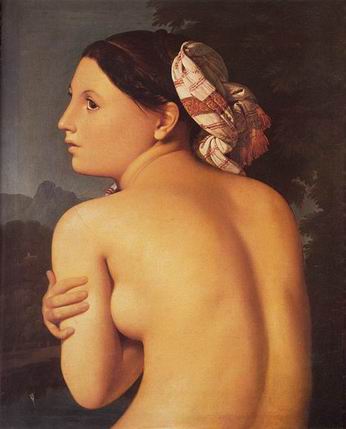
Le Violon d'Ingres - by Man Ray, 1924


"Man Ray was an admirer of the paintings of Jean-Auguste-Dominique Ingres and made a series of photographs, inspired by Ingres's languorous nudes, of the model Kiki in a turban. Painting the f -holes of a stringed instrument onto the photographic print and then rephotographing the print, Man Ray altered what was originally a classical nude. He also added the title Le Violon d'Ingres , a French idiom that means "hobby."

The transformation of Kiki's body into a musical instrument with the crude addition of a few brushstrokes makes this a humorous image, but her armless form is also disturbing to contemplate. The title seems to suggest that, while playing the violin was Ingres's hobby, toying with Kiki was a pastime of Man Ray. The picture maintains a tension between objectification and appreciation of the female form."- in The Getty

Adaptação do texto em Inglês:
Man Ray era um admirador da pintura de Ingres (1780-1867) e fez uma série de fotografias inspiradas em alguns nus do pintor (ver, por exemplo, "figure du bain" ). Neste caso Man Ray fotografa a Modelo Kiki em turbante mas acrescenta-lhe as marcas de um instrumento de cordas nas suas costas. Curiosidade em http://coimbraenossa.blogspot.com/2007/03/ingres-manray-e-msica.html

Photo from http://www.psychoanalysis.org.uk/

8 February 2007

Le Regard Oblique- by Robert Doisneau, 1948


Photo from skjstudio

O Título diz tudo. "Olhar de Soslaio" na tradução da "História da Arte" da Gulbenkian

17 January 2007

Boys running into the surf Lake Tanganyika- by Munkacsi, 1930


"The strongest Photographic influence came from the Hungarian photophapher Munkacsi. I saw his picture of some boys on a beach and I thought it was perfection" - Cartier-Bresson in "Dialogue with photography.", Dewi Lewis Publishing

"A mais forte influência fotográfica veio do fotógrafo Hungaro Munkacsi. Vi uma fotografia sua de alguns rapazes numa praia e pensei que era perfeita." - Cartier-Bresson em "Dialogue with photography", Dewi Lewis Publishing

Photo from ICP